

Every serious player knows that soccer conditioning is the foundation that separates ninety-minute engines from substitutes who fade after sixty. Building genuine match fitness requires more than jogging laps around the pitch; it demands a structured blend of aerobic capacity, repeated sprint ability, and positional specificity that mirrors the chaotic rhythm of a real game. Coaches at the highest level design weekly microcycles that balance high-intensity intervals with tactical drills so athletes arrive at kickoff fresh yet resilient. The following breakdown examines the critical selection criteria, specific training modalities, and decision-making frameworks needed to construct a program that translates directly to competitive performance.
Defining the Physical Demands of the Modern Game
Analyzing GPS data from top-flight leagues reveals that elite outfield players cover between ten and thirteen kilometers per match with roughly eight hundred to twelve hundred meters at high speed. This profile dictates that any effective preparation must replicate the intermittent nature of those distances rather than relying on steady-state runs. Midfielders typically log the highest total volume while wingers and fullbacks accumulate the most explosive efforts above twenty-five kilometers per hour. Understanding these positional nuances allows a strength coach to prescribe the correct work-to-rest ratios for each athlete. Ignoring this granularity leads to a generic fitness base that fails under the specific fatigue patterns of a competitive fixture.
A comprehensive needs analysis also accounts for the acceleration and deceleration loads that stress the hamstrings and groin complex. Research shows that professional players perform forty to sixty high-intensity accelerations and decelerations per game, each placing eccentric forces up to six times body weight on the lower limbs. Training sessions must therefore include repeated change-of-direction drills at match velocity to condition connective tissue for those spikes. Without this exposure, athletes enter the season vulnerable to soft-tissue injuries during the first congested fixture block. The physical profile of the opponent and the team’s tactical system further refine the conditioning targets for each week.
Selecting Conditioning Methods Based on Training Phase
Periodization models generally divide the calendar into off-season, pre-season, in-season, and transition blocks, each demanding a distinct conditioning emphasis. During the off-season the priority shifts toward general aerobic development using longer intervals such as four by four minutes at ninety percent of maximal aerobic speed with three minutes active recovery. This builds the oxygen transport system that fuels recovery between high-intensity bursts later in the year. As pre-season approaches, the focus narrows to game-specific intensity with smaller-sided games and position-specific shuttle runs that mimic the decision-making demands of a match. Volume drops while intensity peaks to sharpen the anaerobic pathways without accumulating residual fatigue.
In-season maintenance relies heavily on the match itself as the primary conditioning stimulus, supplemented by targeted top-up sessions for non-starters. A typical Wednesday microcycle for reserves might involve six by three minutes at ninety-five percent maximal aerobic speed on a treadmill or grass to replicate the metabolic load of a half. Transition periods allow a deliberate reduction in structured running, replacing it with cross-training modalities like cycling or swimming to maintain cardiac output while unloading joints. Aligning method selection with the calendar phase prevents the common error of training high-intensity qualities year-round, which blunts adaptation and elevates injury risk.
Integrating Ball-Driven Games for Tactical Fitness
Small-sided games remain the most efficient tool for developing soccer conditioning because they couple physiological stress with technical execution under pressure. A four-versus-four format on a thirty-by-twenty-meter grid forces players to perform high-intensity actions every thirty to forty seconds while constantly scanning, passing, and receiving. Heart-rate data from these sessions routinely shows averages above ninety percent of maximum with time spent in the red zone exceeding fifteen minutes per hour. Coaches can manipulate pitch dimensions, player numbers, and scoring rules to target specific energy systems; larger grids with floaters emphasize aerobic power, while tighter spaces with transition rules spike anaerobic capacity.
On the Armas Strength and Conditioning channel, they cover four essential match fitness drills that you can watch right here.
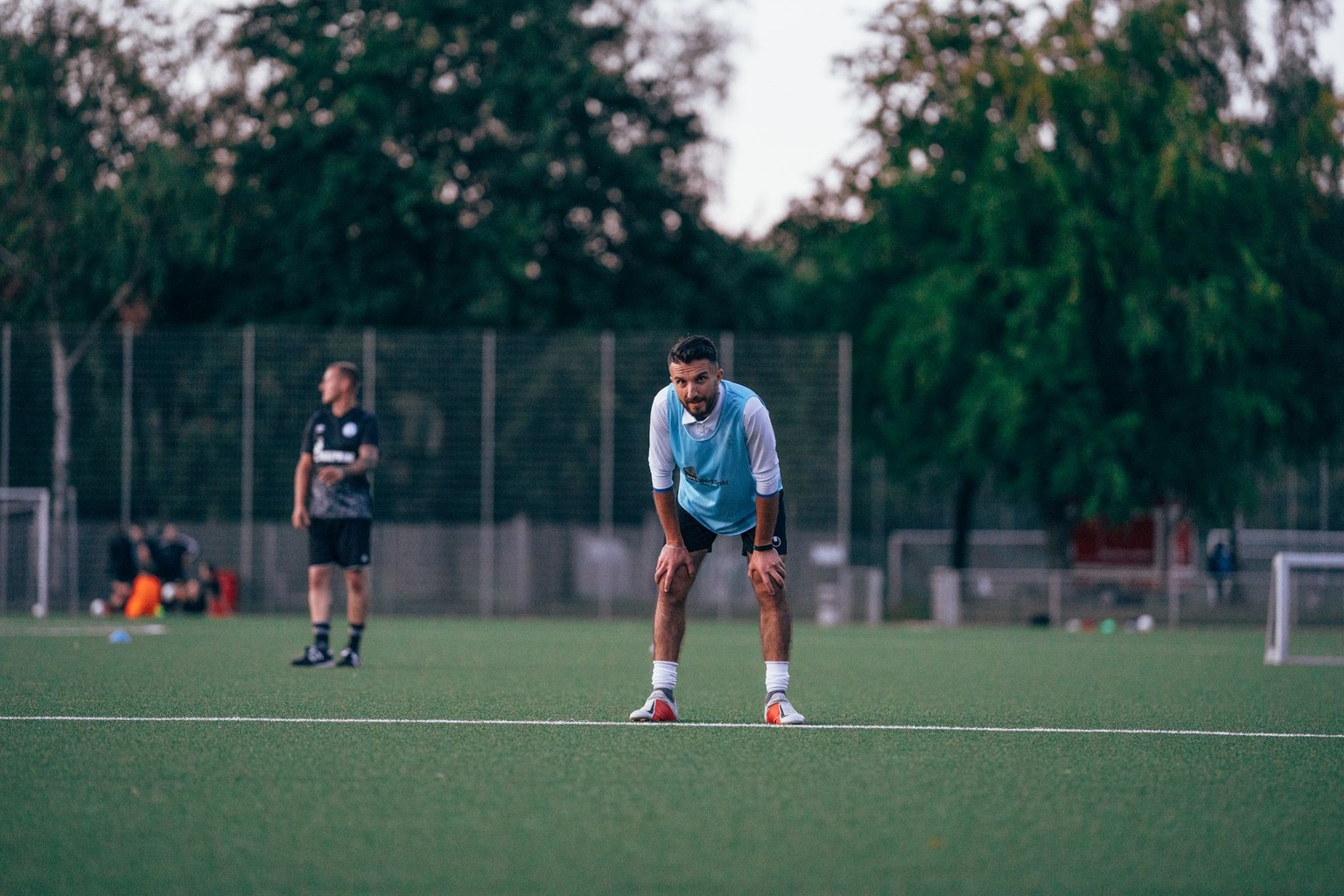
Large-sided games such as eleven-versus-eleven on two-thirds of a full pitch bridge the gap between isolated running and competitive rhythm. These sessions allow the coaching staff to rehearse tactical patterns, pressing triggers, build-up structures, counter-attack timing, while players accumulate match-specific distances at self-selected intensities. The psychological component is equally valuable; athletes push harder when the outcome of a drill influences starting spots or team pride. Monitoring external load via GPS during these games ensures the prescribed metabolic stimulus aligns with the weekly periodization plan rather than exceeding it.
Using High-Intensity Interval Running for Precision
When the schedule limits ball work, during international breaks or heavy travel weeks, structured high-intensity interval running provides a controllable alternative to maintain match fitness. A classic protocol involves ten by thirty seconds at one hundred twenty percent of maximal aerobic speed with thirty seconds passive rest, targeting the anaerobic glycolytic system and buffering capacity. Another staple is the thirty-thirty: thirty seconds at one hundred percent maximal aerobic speed followed by thirty seconds jogging, repeated for two blocks of eight minutes with four minutes between blocks. These formats replicate the on-off heart-rate kinetics of a match without the technical variability of games.
Treadmill-based protocols offer additional precision for injured or returning players who need exact speed and incline control. A Division One program might prescribe five by four minutes at ten kilometers per hour on a five percent grade to simulate uphill running mechanics while minimizing eccentric load on the knee. The fixed belt speed forces the athlete to maintain cadence, reinforcing neuromuscular patterns that transfer to acceleration on grass. Data from force plates and heart-rate variability guides daily adjustments, ensuring the session hits the intended physiological target without overreaching. This level of control is difficult to achieve in group field sessions where competitive instincts often drive intensity beyond the plan.
Building Repeated Sprint Ability for Decisive Moments
Matches are frequently decided in short windows where a player must produce three to five maximal efforts separated by twenty to forty seconds of recovery. Repeated sprint ability training addresses this quality directly through sets of six by twenty meters or six by thirty meters with twenty seconds rest between reps and four minutes between sets. The key coaching point is maintaining sprint mechanics, upright posture, aggressive arm drive, minimal ground contact time, even as lactate accumulates. Timing each rep provides immediate feedback; a drop-off greater than ten percent from the first to the last sprint signals insufficient recovery or inadequate aerobic support.
Incorporating change-of-direction sprints such as the pro-agility shuttle or a ten-meter-five-meter-ten-meter pattern adds the deceleration component that straight-line runs miss. These drills condition the braking mechanics essential for defending in tight spaces or creating separation on the wing. A practical weekly layout might pair a linear repeated sprint day on Tuesday with a multidirectional repeated sprint day on Friday, separated by a tactical session on Wednesday. This distribution respects the neuromuscular recovery timeline while ensuring both qualities receive a stimulus every seven to ten days during the competitive phase.
Monitoring Load and Adjusting Individual Prescriptions
Modern soccer conditioning relies on objective data to individualize prescriptions within a team framework. GPS metrics, total distance, high-speed distance, sprint count, acceleration and deceleration efforts, create a fingerprint for each player’s match output. Comparing training loads to match benchmarks reveals whether a midfielder hit ninety percent of his typical high-speed meters during a small-sided game or fell short. If the deficit persists across two sessions, the coach can add a tailored top-up such as two extra intervals after the main group finishes. This reactive approach prevents the drift into undertraining that often plagues squad players with limited minutes.

Internal load markers like session rating of perceived exertion multiplied by duration (sRPE-TL) complement external data by capturing the physiological cost relative to the athlete’s fitness state. A sudden spike in sRPE for a given external output may indicate illness, poor sleep, or accumulating neuromuscular fatigue. Heart-rate variability measured each morning adds a readiness layer; a drop of more than ten percent from baseline suggests the autonomic nervous system is stressed, prompting a reduction in high-intensity volume for that day. Integrating these streams into a daily dashboard allows the performance staff to make evidence-based decisions rather than relying on intuition or tradition.
Choosing the Right Mix for Your Specific Context
No single conditioning model fits every environment; the optimal blend depends on roster size, facility access, coaching philosophy, and competitive calendar density. A college program with a twenty-five-player roster and three training days per week might lean heavily on large-sided games to maximize ball contact and fitness simultaneously. Conversely, a professional club with a full-time performance department, indoor dome, and two matches per week can afford specialized block sessions, linear running on Monday, repeated sprints on Thursday, tactical games on Saturday, because recovery resources like cryotherapy and nutrition support are readily available. Budget constraints also dictate whether GPS units are issued to every player or reserved for starters, shaping the granularity of load management.
Youth academies prioritize long-term athletic development over immediate match readiness, so their conditioning emphasizes movement competency, basic aerobic capacity, and fun competition through tag games and relay races. As players mature into the under-nineteen bracket, the curriculum gradually introduces structured intervals and position-specific shuttles to bridge the gap to the senior physical profile. The senior team then layers on the advanced periodization, individualized top-ups, and real-time monitoring described earlier. Recognizing where your program sits on this continuum prevents the mistake of copying elite protocols without the infrastructure to support them, ensuring every session moves the needle toward genuine match fitness.

I’ve been kicking a ball around since I could walk, and the strategy behind the beautiful game never stops fascinating me. I love breaking down match tactics and sharing the stories of players who make football unforgettable.