Introduction to VAR in Soccer
Video Assistant Referee, commonly known as VAR, is a revolutionary technology introduced to enhance decision-making accuracy in soccer. The primary purpose of VAR soccer is to assist referees in reviewing crucial moments during matches, reducing human error and ensuring fair play. This technology allows officials to review video footage for key events such as goals, penalties, direct red card incidents, and mistaken identity situations.
The inception of VAR in soccer originated from the growing need to improve the integrity of the game. Traditional officiating relied solely on the referee’s perspective on the field, which sometimes led to controversial decisions impacting match outcomes. The introduction of VAR technology aimed to bring more transparency and accuracy to these decisions by enabling referees to consult video evidence without interrupting the flow of the game excessively.
Historically, VAR has its roots in other sports where video replay had already proven beneficial. Soccer’s governing bodies, including FIFA and the International Football Association Board (IFAB), began testing VAR in controlled environments and smaller competitions in the mid-2010s. After successful trials, VAR was officially approved for use in top-tier competitions globally starting around 2018, including the FIFA World Cup and major leagues around the world.
VAR soccer has since become a critical component of modern soccer officiating, integrating advanced technology with traditional refereeing to enhance the accuracy of decisions. Its implementation represents a significant step forward in soccer technology, aiming to maintain the sport’s competitive integrity while adapting to the demands of the modern game and its global audience.
What is VAR?
VAR, which stands for Video Assistant Referee, is a soccer review system designed to assist match officials in making accurate decisions during a game. The primary purpose of VAR is to minimize human error by providing referees with video footage and multiple camera angles of key incidents that occur on the field. This system has become an integral part of modern soccer, enhancing fairness and transparency in officiating.
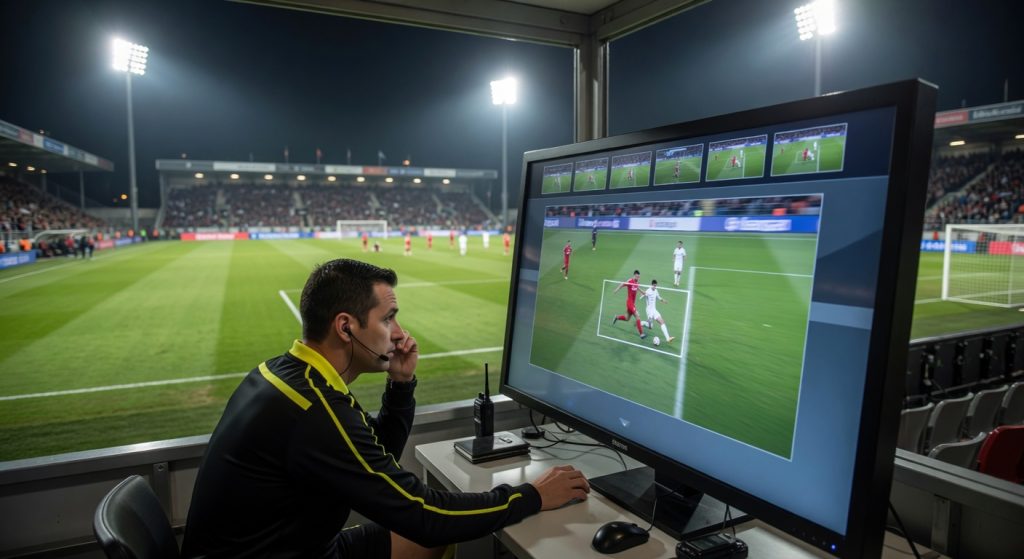
The VAR system operates with a team of video assistant referees who monitor the match from a remote location using video technology. When a potentially contentious decision arises—such as goals, penalty decisions, direct red card incidents, or cases of mistaken identity—the on-field referee can consult the VAR team or review the footage on a pitchside monitor. This consultation helps ensure that correct decisions are made, reducing controversy and improving the overall integrity of the game.
By incorporating the VAR definition into the rules of soccer, leagues and competitions aim to improve decision-making while maintaining the flow of the game. The video assistant referee system does not replace the on-field referee but acts as a supportive tool, offering a second layer of review. Overall, the implementation of VAR has been a significant advancement in the sport, transforming how referees handle crucial moments and increasing confidence in the outcomes of matches.
History and Evolution of VAR
The history of VAR (Video Assistant Referee) technology in soccer is a significant chapter in the sport’s ongoing evolution. Initially introduced to reduce human error in refereeing, the VAR system was piloted in various leagues during the mid-2010s. The journey of VAR history began in earnest in 2016 when FIFA officially approved its use in competitive matches. Early adoption focused on testing and refining the technology to ensure accurate and efficient decision-making.
The VAR evolution continued rapidly as global soccer leagues recognized its potential to enhance fairness and transparency. By 2018, the technology was prominently featured at the FIFA World Cup in Russia, marking a historic point in the soccer technology timeline. This milestone accelerated adoption as more leagues around the world integrated VAR into their match protocols.
Since then, the evolution of VAR has included improvements in communication systems, faster review processes, and expanded use in different match scenarios beyond goals and penalties. The soccer technology timeline reflects a steady progression from experimental phases to widespread acceptance with many top leagues like the English Premier League, Serie A, and La Liga adopting VAR fully. This evolution demonstrates soccer’s commitment to leveraging advanced technology to uphold the integrity of the game.
Impact of VAR on Game Officiating

The introduction of the Video Assistant Referee (VAR) system has brought significant changes to soccer refereeing, elevating standards and enhancing match decision accuracy. Prior to VAR, referees had to rely solely on their real-time observations and the limited perspectives available on the pitch. This often led to controversial decisions that could influence the outcome of matches. VAR has revolutionized this by providing referees with additional video technology support to review crucial moments and rectify potential errors.
One of the primary ways VAR impacts soccer refereeing is by increasing decision accuracy. In key game situations such as goals, penalty kicks, red cards, and cases of mistaken identity, referees now have the opportunity to consult video footage. This helps reduce human error and ensures that decisions are made correctly more often than before. By improving the precision of these critical rulings, VAR substantially contributes to the fairness and integrity of the sport.
Moreover, VAR has raised the overall refereeing standards in soccer. With the technology in place, referees are held to a higher level of accountability, knowing that their calls can be reviewed and overturned if necessary. This encourages greater vigilance and professionalism on the field. As a result, the quality of officiating has improved, as referees are more focused and cautious in their decision-making processes.
However, VAR also introduces new dynamics to game officiating. While it enhances accuracy, the flow of the game can sometimes be interrupted during the video review process. This has sparked ongoing discussions on balancing the benefits of precise decisions with maintaining the game’s natural rhythm. Despite these challenges, the consensus remains that the VAR impact on soccer refereeing is overwhelmingly positive due to its strong contribution to match decision accuracy.
Ultimately, VAR’s integration into soccer represents a major step forward in harnessing technology to support referees. By significantly improving decision-making accuracy and setting higher refereeing standards, VAR helps ensure that matches are decided more fairly. As the system continues to evolve and become more efficient, its positive influence on the sport’s officiating will likely become even more pronounced, further enhancing the experience for players, officials, and fans alike.
Improvements in Decision Accuracy
The introduction of Video Assistant Referee (VAR) technology has significantly enhanced officiating accuracy in soccer matches, providing a robust mechanism for correcting on-field refereeing errors. By enabling decision review, VAR ensures that critical calls—such as goals, penalties, red cards, and mistaken identity incidents—can be thoroughly examined through multiple camera angles before finalizing a decision.
This technological intervention has led to a marked reduction in controversial decisions, as referees are empowered to rely on VAR corrections to uphold fairness and integrity in the game. The decision review process, though occasionally time-consuming, has proven crucial in rectifying clear mistakes, thereby improving the overall quality of officiating. It acts as a safety net, catching errors that might otherwise have gone unnoticed and potentially altered match outcomes unjustly.
Moreover, the presence of VAR encourages players and officials to maintain higher standards of conduct, knowing that any infringements can be retrospectively identified and penalized. While not infallible, the system has notably decreased the margin of error in refereeing, making the sport more equitable. Overall, VAR corrections represent a pivotal advancement in decision accuracy, fostering trust and credibility in soccer officiating worldwide.
Controversies and Criticism
The introduction of VAR (Video Assistant Referee) in soccer has sparked numerous VAR controversies, generating intense soccer debates among fans, players, and experts alike. One primary criticism of VAR is the disruption it causes to the flow of the game. Matches can be paused for several minutes while referees review footage, which some argue breaks the natural rhythm and excitement of soccer. This delay often frustrates both players and spectators.
Another common criticism of VAR involves its perceived inconsistency in decision-making. Despite video technology aiming to provide clarity, referees sometimes interpret incidents differently after review, leading to accusations of subjectivity and bias. This inconsistency fuels ongoing criticism of VAR, as some crucial moments remain contentious even after multiple reviews.
Moreover, critics point out that VAR can undermine the authority of on-field referees. When decisions are frequently overturned or questioned, it may diminish the confidence players and fans have in the referees’ original calls. This shift affects not only the referee but also the overall atmosphere of the match.
Lastly, there is debate around the technology’s application scope. Some argue VAR is overused, being called upon for minor infractions that could be resolved without video assistance, leading to excessive interruptions. Others feel it should be expanded to cover more situations to ensure fair play. These contrasting views contribute to the dynamic and ongoing soccer debates regarding VAR’s role in the sport.
VAR’s Influence on Players and Fans

The introduction of the Video Assistant Referee (VAR) system has significantly altered the dynamics of soccer by impacting both players and fans. For players, VAR effects mean a shift in how they approach the game—knowing that every decision can be reviewed has made them more cautious and disciplined on the field. This technology curtails simulation and dishonest behavior, encouraging fair play as players realize that attempts to deceive referees are likely to be caught. However, it can also increase pressure and frustration, particularly when decisions are delayed or overturned, affecting players’ mental states during critical moments.
For fans, VAR has transformed the fan experience by introducing a layer of transparency and fairness that was previously absent. Supporters benefit from the increased accuracy of match outcomes, which can reduce disputes and controversies around key decisions. However, the implementation of VAR also brings moments of suspense and uncertainty as fans wait for the confirmation or reversal of a decision. This can enhance the emotional rollercoaster of a game but might also interrupt the natural flow and rhythm of the match, sometimes leading to impatience or dissatisfaction among supporters.
The effects of VAR on the fan experience are mixed; while many appreciate the added justice it brings to the game, some feel that the stoppages detract from the excitement. Stadium atmospheres can change as fans experience prolonged silences or waiting periods during reviews, which impacts the collective energy and engagement. On social media and in discussions, VAR decisions frequently become hot topics, amplifying fan interaction and sometimes polarizing opinions on specific incidents.
Overall, VAR’s influence has brought a new dimension to soccer where both players and fans must adapt to the evolving reality of the sport. While it enhances fairness and accountability, it challenges emotions and expectations, reshaping the experience and behavior of those involved in the beautiful game.
Player Reactions to VAR
Players have shown varied adaptations and reactions to VAR decisions and interruptions, significantly influencing their behavior on the field. The implementation of VAR has made soccer players more cautious in their actions, knowing that any on-field conduct could be scrutinized through video review. This heightened awareness often leads to players moderating aggressive or borderline behaviors to avoid penalties or bookings.
From a soccer player perspective, the presence of VAR introduces an element of unpredictability, as game interruptions for review create pauses that players must mentally and physically adjust to. This can disrupt a player’s rhythm and flow, requiring strong mental resilience to maintain focus during the stoppages. Many players have developed strategies to remain calm and collected, understanding that VAR decisions, though sometimes frustrating, aim to ensure fairness in the game.
Additionally, VAR influence has sparked changes in how players communicate with referees and teammates during matches. Some players endeavor to express their concerns more diplomatically, recognizing that confrontational behavior may be caught on camera, leading to further disciplinary actions. In contrast, others use the VAR interruptions to strategically regroup and plan their next moves, turning the interruption into an opportunity.
Overall, player behavior under the influence of VAR reflects a growing acceptance and adaptation to technology in soccer, balancing competitive instincts with enhanced sportsmanship and discipline.
Fan Perception and Engagement
The implementation of VAR has had a significant effect on fan reactions during soccer matches. While some fans appreciate the increased fairness and accuracy that VAR brings to the game, others feel that it disrupts the natural flow and emotional intensity of the match. The VAR impact on fans varies widely; for some, the technology enhances their soccer match experience by reducing controversial decisions and offering clarity, while for others, it can lead to frustration due to delays and perceived interruptions.
Fan perception is deeply influenced by how VAR decisions are communicated and the transparency of the review process. When fans understand the reasoning behind a VAR decision, they tend to be more accepting, even if the outcome is not favorable to their team. Conversely, unclear or lengthy reviews can lead to negative fan reactions, diminishing their engagement and enthusiasm. VAR has changed the way fans interact with the game, prompting more discussion and analysis both in stadiums and on social media.
Overall, VAR’s presence in soccer has transformed the fan experience, blending technology with tradition. While it offers the promise of a fairer game, the challenge remains to balance technological intervention without compromising the passion and spontaneity that make soccer a beloved sport worldwide. As fans continue to adapt, their engagement and reactions will play a crucial role in shaping the future use and acceptance of VAR in soccer.

I’ve been kicking a ball around since I could walk, and the strategy behind the beautiful game never stops fascinating me. I love breaking down match tactics and sharing the stories of players who make football unforgettable.