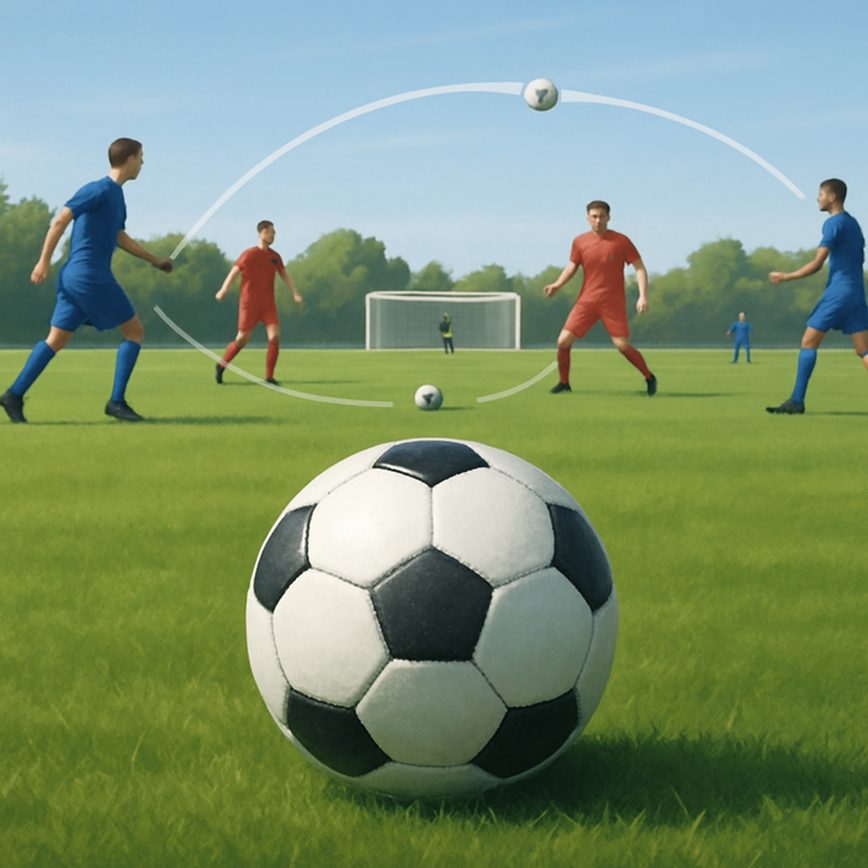
Understanding Build Up Play in Soccer
Build up play is a fundamental concept in soccer that revolves around the methodical progression of the ball from the defensive third to the attacking third of the pitch. It involves coordinated team efforts to maintain control and possession football, creating opportunities to penetrate the opposition’s defense. This approach is essential for teams looking to dictate the pace of the game, minimize turnovers, and construct high-quality chances through deliberate and patient play rather than relying on long balls or risky plays.
In soccer basics, understanding build up play is crucial because it forms the backbone of a team’s ability to control the tempo and flow of the match. By prioritizing possession football, teams emphasize short, precise passes, intelligent movement off the ball, and spatial awareness to retain the ball and gradually maneuver through the opposition’s pressing lines. This careful orchestration helps reduce the risk of losing the ball in dangerous areas and allows the team to assess attacking options more clearly.
The importance of build up play goes beyond mere ball retention; it is a key element in modern soccer tactics. Contemporary teams often adopt a possession-based approach, where build up play serves as a strategic tool to dismantle well-organized defenses. By patiently circulating the ball and drawing opponents out of position, teams create gaps and passing lanes that can be exploited, resulting in higher-quality scoring opportunities. This approach also requires players to be technically proficient and tactically disciplined, ensuring that each pass and movement contributes towards the collective team strategy.
Moreover, build up play integrates seamlessly with pressing strategies, as winning the ball back in advanced areas often depends on how effectively a team transitions from defense to attack. Teams employing possession football use build up play to not only create attacking chances but also to maintain defensive solidity, as keeping the ball reduces the opponent’s opportunities to counterattack. Ultimately, understanding and mastering build up play is indispensable for any team aiming to compete at the highest levels of soccer.
Definition and Purpose
Build up play in soccer refers to the tactical approach teams use to advance the ball from their defensive areas towards the opponent’s goal methodically and strategically. This style of play emphasizes maintaining possession and controlling the flow of the game by carefully passing the ball among teammates. The main objective of build up play is to create scoring opportunities while minimizing the risk of losing possession to the opposition.
The concept of build up play meaning revolves around patience and precision. Rather than rushing forward with long or speculative passes, players focus on short, controlled passes to break down the opponent’s defensive lines. This approach is central to many modern soccer tactics, as it allows a team to dominate possession strategy and dictate the tempo of the match. By doing so, teams can wear down their opponents, exploit space effectively, and create high-quality chances to score.
In summary, build up play is a crucial component of soccer tactics focused on ball retention and strategic movement. Its primary goals during a match are to keep possession, organize attacks thoughtfully, and maintain control over the game’s rhythm to increase the likelihood of a successful offensive outcome. This possession strategy requires technical skill, teamwork, and intelligent decision-making throughout the team.
Key Elements of Effective Build Up Play
Successful build up play in soccer relies heavily on mastering fundamental skills such as passing techniques, player movement, positional awareness, and seamless team coordination. Precise passing techniques form the backbone of building attacks from the back. Players must be adept at short, accurate passes to maintain possession and create opportunities to advance the ball. Equally important is player movement—off-the-ball runs and repositioning help to create passing lanes and disrupt opposing defenses, providing multiple options for the ball carrier.
Positional awareness ensures each player understands their role within the team structure and maintains optimal spacing. This knowledge prevents crowding and allows for effective ball circulation, which is critical during the build up phase. Coordination among teammates is essential; it integrates individual skills into a cohesive unit, enabling fluid transitions from defense to attack without losing control of the game.
In essence, a team’s ability to execute successful build up play depends on disciplined practice of passing techniques combined with intelligent player movement, strong positional awareness, and synchronized team coordination. When these elements come together, the team can control the tempo, exploit weaknesses in the opposition, and create scoring opportunities systematically.
Techniques and Strategies to Improve Build Up Play
Improving build up play requires focused training on several key areas, including passing drills, positional play, ball control, and team tactics. These elements work together to create a fluid and effective transition from defense to attack, enabling teams to maintain possession and create scoring opportunities.
Passing drills are essential to enhance players’ accuracy, timing, and decision-making under pressure. Coaches often incorporate exercises that involve short, quick passes in tight spaces to simulate game-like scenarios. This sharpens players’ ability to perform one-touch passes and develop an intuitive connection with teammates, which is crucial for maintaining the flow of build up play.
Positional play, or “positional rondos,” emphasize the importance of spatial awareness and movement off the ball. Training sessions focus on maintaining optimal positioning to create passing lanes and support the player in possession. Players learn how to shift dynamically as a unit, ensuring options are always available to progress the ball upfield effectively.
Ball control drills help players develop a confident first touch and the ability to quickly adjust under pressure. Techniques such as receiving passes while on the move, controlling various types of passes, and mastering dribbling skills are practiced consistently. These exercises improve individual skill levels, which are fundamental for executing smooth build up sequences without losing possession.
Incorporating team tactics is pivotal to link individual abilities into a cohesive system. Coaches design training scenarios that replicate real-game build up situations, encouraging players to read the game, anticipate movements, and communicate effectively. Tactical sessions often include practicing playing out from the back, using width to stretch opponents, and coordinated pressing to regain the ball.
By combining these techniques and training methods—passing drills, positional play, ball control, and strategic team tactics—players and coaches can significantly enhance their build up play. Consistent practice ensures a more organized, confident, and adaptable team capable of controlling matches and creating high-quality chances.
Passing and Movement Drills
Effective build up play in soccer relies heavily on precise passing and intelligent off the ball movement. To enhance these skills, specific passing drills are essential. One highly effective drill is the “Triangle Passing” exercise, where three players form a triangle and focus on quick, accurate passes while constantly moving to maintain proper spacing. This drill improves passing accuracy and timing, teaching players to anticipate their teammates’ next move.
Another important training exercise is the “Give and Go” drill, which emphasizes swift passing combined with immediate off the ball movement. Players pass the ball and then quickly move into space to receive a return pass. This drill helps improve players’ timing and understanding of movement to support the attack, crucial for maintaining fluid build up play.
The “Passing Lanes” drill is also useful to enhance vision and decision-making. Players practice passing in tight spaces while teammates move to create clear passing lanes. This drill sharpens both passing precision and off the ball movement, encouraging players to find and exploit gaps.
Incorporating these passing drills and off the ball movement exercises into regular training routines will elevate a team’s overall build up play. Focus on maintaining communication, timing, and constant movement to support players in possession, which can effectively break down opposing defenses.
Positional Awareness and Spacing
In build up play, understanding positional play and spatial awareness is vital for creating effective options on the field. Each player must be aware of their positioning relative to teammates and opponents to maintain team formation and ensure fluid ball movement. Proper spacing prevents overcrowding and opens passing lanes, allowing the team to progress the ball upfield with control and precision.
Players who master spatial awareness can anticipate movement and adjust their position dynamically to maintain balance and support both in attack and defense. This situational understanding helps in creating space not only for themselves but also for their teammates, making the team more unpredictable and harder to defend against. Maintaining the right distances between players is crucial to avoid congestion and create multiple passing options that can break through defensive lines.
Team formation acts as the framework within which players coordinate their positions. Adhering to formation principles while adapting to match situations allows the team to exploit gaps in the opposition’s structure. Effective positional play combined with intelligent spacing orchestrates smooth transitions from defense to attack, increasing the chances of successful build up play and overall team performance.
Challenges and Common Mistakes in Build Up Play
Build up play is a fundamental aspect of modern soccer, but teams often face significant challenges when trying to implement it effectively. Recognizing and overcoming these build up challenges is crucial for maintaining possession and creating scoring opportunities. One of the most common mistakes teams make during build up play is poor decision-making under pressure, which often leads to turnovers. Players may rush their passes or become overly predictable, allowing opposing defenders to intercept the ball and launch quick counterattacks.
Another frequent error involves a lack of proper spacing and movement off the ball. When players cluster too closely, passing options become limited, increasing the risk of turnovers and disrupting the flow of play. Teams must emphasize constantly moving into open spaces, creating multiple passing lanes to support the ball carrier. Without this dynamic movement, build up play stagnates, making it easier for opponents to press aggressively and force errors.
Communication breakdowns also contribute to common mistakes during build up. Clear verbal and non-verbal signals between players are essential to coordinate runs and passes. When communication fails, players may mistime their runs or misinterpret intended passes, resulting in costly errors. Coaches should focus on drills that enhance team coordination and build trust in each player’s decision-making ability during these phases of play.
To avoid these pitfalls, teams should prioritize composure and patience in their build up play. Rushing forward without sufficient support often leads to isolated players and unnecessary risk. Instead, encourage players to maintain possession with short, accurate passes while scanning for better options. Developing a tactical plan that balances risk and control helps minimize turnovers and keeps the team in command of the game rhythm.
Finally, it is important to analyze and learn from each mistake as part of continuous improvement. Reviewing game footage to identify where build up challenges occurred allows teams to adjust their strategies and correct recurring errors. By addressing these common mistakes proactively, teams can strengthen their build up play, reduce turnovers, and ultimately gain a competitive edge on the field.
Handling Pressure from Opponents
In soccer, pressure handling is a critical skill to master, especially when facing intense defensive pressing from opponents. Maintaining composure under pressure allows players to make better decisions and sustain effective ball retention, which is vital for building up play. One key strategy is to stay calm and avoid rushing passes. Keeping your head up and scanning the field helps in anticipating movements and finding the best options for safe ball circulation.
When confronted with aggressive pressing, using quick, short passes with teammates minimizes the risk of losing possession. Players should focus on creating triangles and passing lanes to provide multiple outlets, making it harder for opponents to trap the ball carrier. Employing body positioning to shield the ball effectively can buy essential seconds to either pass or move forward.
Another crucial aspect of pressure handling is communication. Teammates must constantly alert each other of incoming pressure and suggest open players for passing. Practicing controlled dribbling and receiving under pressure builds confidence and improves the team’s overall ability to retain possession even in tight spaces. By combining these strategies, teams can effectively neutralize high pressing tactics and maintain possession, ultimately controlling the flow of the game.
Avoiding Risky Passes and Turnovers
In the fast-paced game of soccer, risky passes and poor decision-making often lead to costly turnovers that can shift momentum in favor of the opposing team. Turnover prevention is essential for maintaining possession and successfully building up play from the back. Players must assess their options calmly and prioritize safe passing to minimize these errors.
One of the main causes of turnovers during build up play is attempting overly ambitious or unnecessary risky passes in tight spaces. These risky decisions increase the likelihood of interception by opponents and disrupt the flow of the team’s game management. Instead, players should focus on maintaining a high level of concentration and choosing safer passing lanes that allow for smoother transitions up the field.
Communicating clearly and positioning teammates effectively also contributes to turnover prevention. By ensuring passing options are readily available and supporting players create triangles or passing networks, teams can facilitate quick, safe passing sequences. This strategic approach lowers the chances of turnovers and improves overall control during crucial moments in the match.
In summary, avoiding risky passes by emphasizing safe passing and intelligent game management leads to fewer turnovers and a more dominant build-up play. Coaches and players alike must train to recognize when to hold possession conservatively and when to exploit opportunities, making turnover prevention a cornerstone of effective team strategy.

I’ve been kicking a ball around since I could walk, and the strategy behind the beautiful game never stops fascinating me. I love breaking down match tactics and sharing the stories of players who make football unforgettable.